
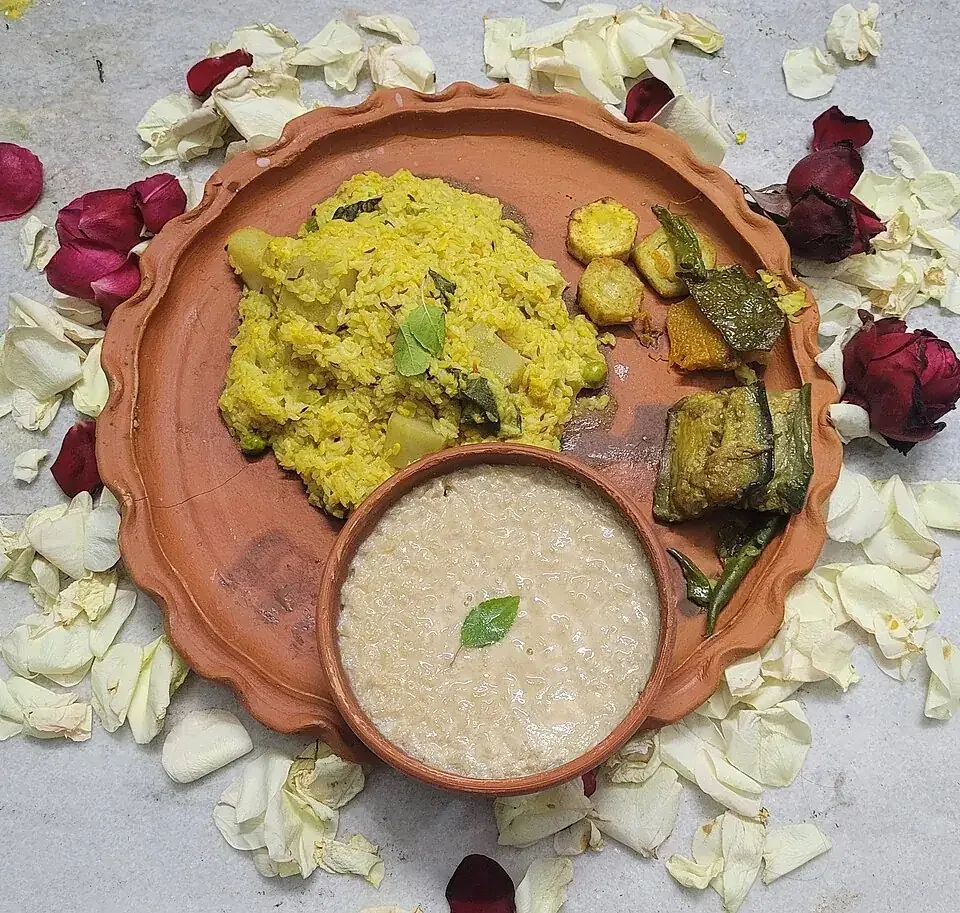
Gobindobhog is a short-grain, white, aromatic rice from West Bengal with a sweet, buttery flavour. It got a Geographical Indication (GI) tag in 2017. It cooks soft and slightly sticky, which makes it the classic rice for payesh, bhog khichuri and pulao. In many markets it is also sold as Jeera rice.
What is Gobindobhog rice?
Gobindobhog (also written Govindobhog, Govindo Bhog or Govind Bhog) is a traditional aromatic rice from West Bengal. The grain is short, white and plump, and it has a natural sweet, buttery fragrance that fills the kitchen while it cooks. Once cooked, the grains are soft and slightly sticky.
Unlike basmati, which is long and cooks into separate, dry grains, Gobindobhog is small. That is exactly why it is loved: it soaks up milk, ghee and spices, and turns creamy in sweets like payesh.
Where the name comes from
The name means “offering to Gobinda”. The rice was the main ingredient in the food offered to Gobindaji (Lord Krishna), the family deity of the Setts of Kolkata. To this day, it is the first choice for temple bhog and festive cooking in Bengali homes.
Where it grows and the GI tag
Gobindobhog is traditionally grown in Bardhaman (Burdwan), Hooghly, Nadia and Birbhum in West Bengal, and later spread to Bankura and Purulia. In October 2017 it was registered as a Geographical Indication (GI No. 531), on a joint application by Bidhan Chandra Krishi Viswavidyalaya (BCKV) and the State Agricultural Management and Extension Training Institute of West Bengal.
The GI area named in that registration covers Burdwan, Bankura, Hooghly, Nadia, Murshidabad, Birbhum, Howrah and North 24 Parganas.
Govind Bhog, Vishnu Bhog, Jeera rice: the names
The same rice goes by many names, and that confuses buyers. Here is the short version:
- Gobindobhog, Govindobhog, Govindo Bhog, Govind Bhog: different spellings of the same Bengal rice.
- Jeera rice: many shops, especially in South India, sell Gobindobhog as “Jeera rice”, because the grain is as small as a cumin (jeera) seed. Do not mix this up with jeera rice the dish, which is any rice tempered with cumin.
- Vishnu Bhog: in the Surguja region of northern Chhattisgarh, a local aromatic rice is grown and sold as Vishnu Bhog, and sometimes also as Govind Bhog. It is fragrant, but it is a different local rice.
Tip for traders: when you ask for a quote, say “Gobindobhog” and ask where the paddy comes from. That one question clears up most mix-ups.
What to cook with it
- Payesh and kheer: the classic. The small grains turn creamy and fragrant in milk.
- Bhog khichuri: the festive khichdi of Durga Puja, made with moong dal.
- Pulao and ghee rice: Bengali basanti pulao, and ghee rice across the South.
- Jeera rice and everyday meals: many homes simply eat it every day for its aroma.
- Small-grain biryani: used by many households and caterers as a close alternative to Kerala’s Kaima and Tamil Nadu’s Seeraga Samba.
How to cook it well
- Rinse gently two or three times, until the water runs mostly clear. Do not rub hard; the grains are small.
- Soak for 20 to 30 minutes. It helps the grains cook evenly.
- Use less water than you think. For plain rice, start with about 1.5 to 2 cups of water per cup of rice and adjust to your taste. For pulao or biryani, use a little less so the grains stay separate.
- Cook on low heat with the lid on, then rest it for 5 minutes before you fluff it with a fork.
- For payesh, add the rice to simmering milk and stir often; the starch thickens the milk naturally.
Aged rice behaves better in the pot: it absorbs more water and cooks less sticky. We explain why in Why aged rice cooks better.
How to pick a good bag
- Even, small grains with very few broken pieces.
- Clean, uniform colour, with no dark, chalky or discoloured grains. Sortex (optical) cleaning removes most of these.
- A natural aroma: rub a few grains in your palm and smell them. Good Gobindobhog smells sweet even raw.
- Aged stock: ask whether the paddy was aged before milling.
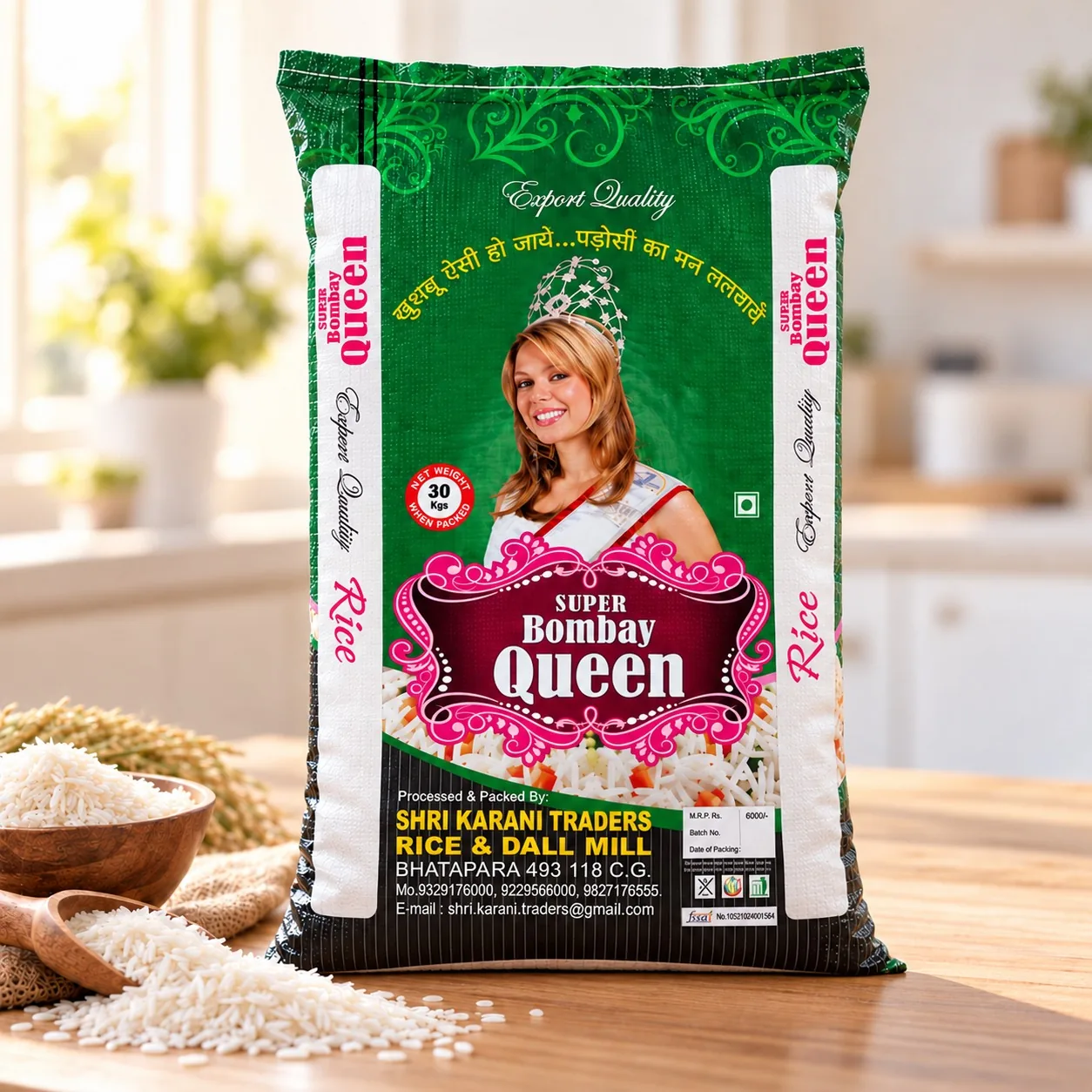
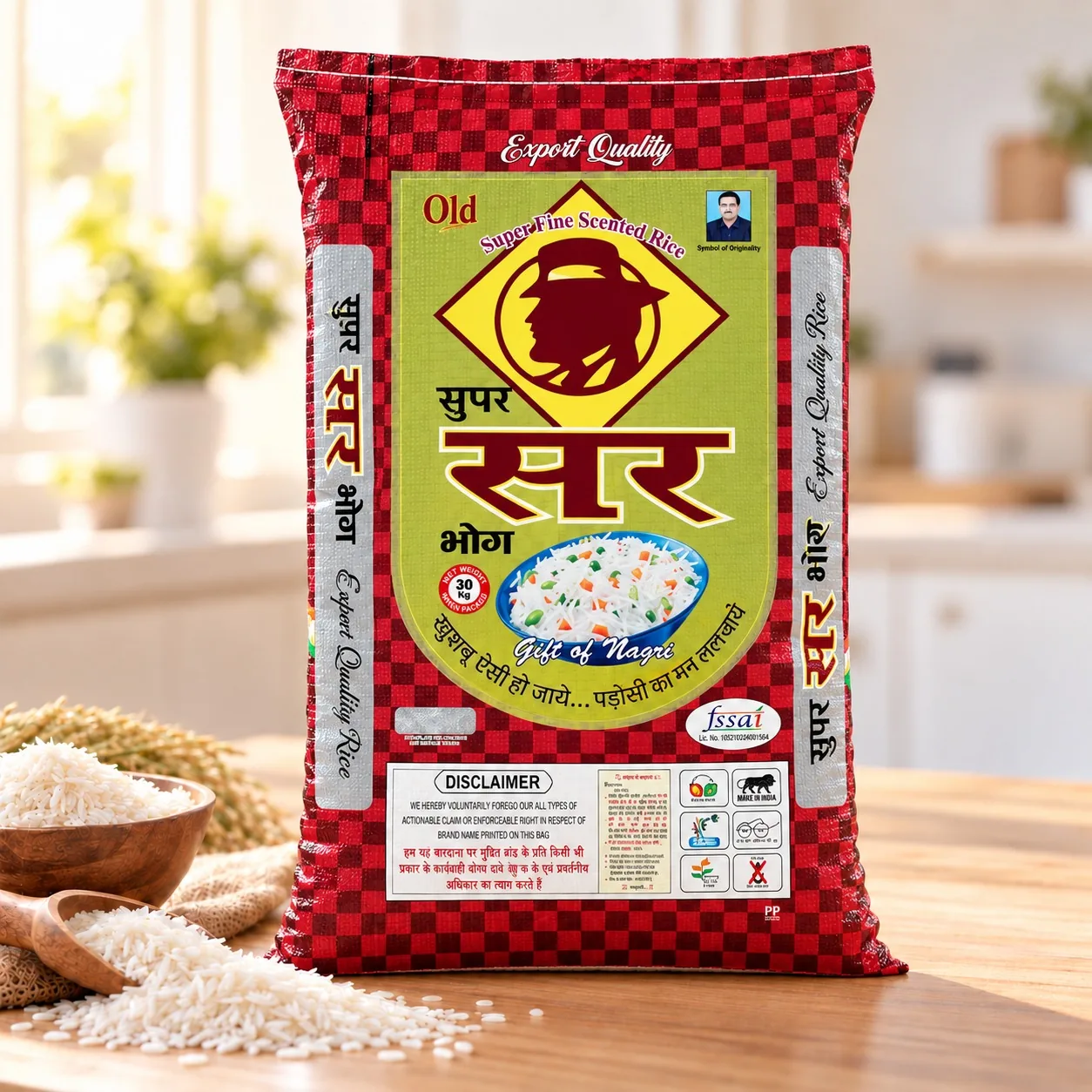
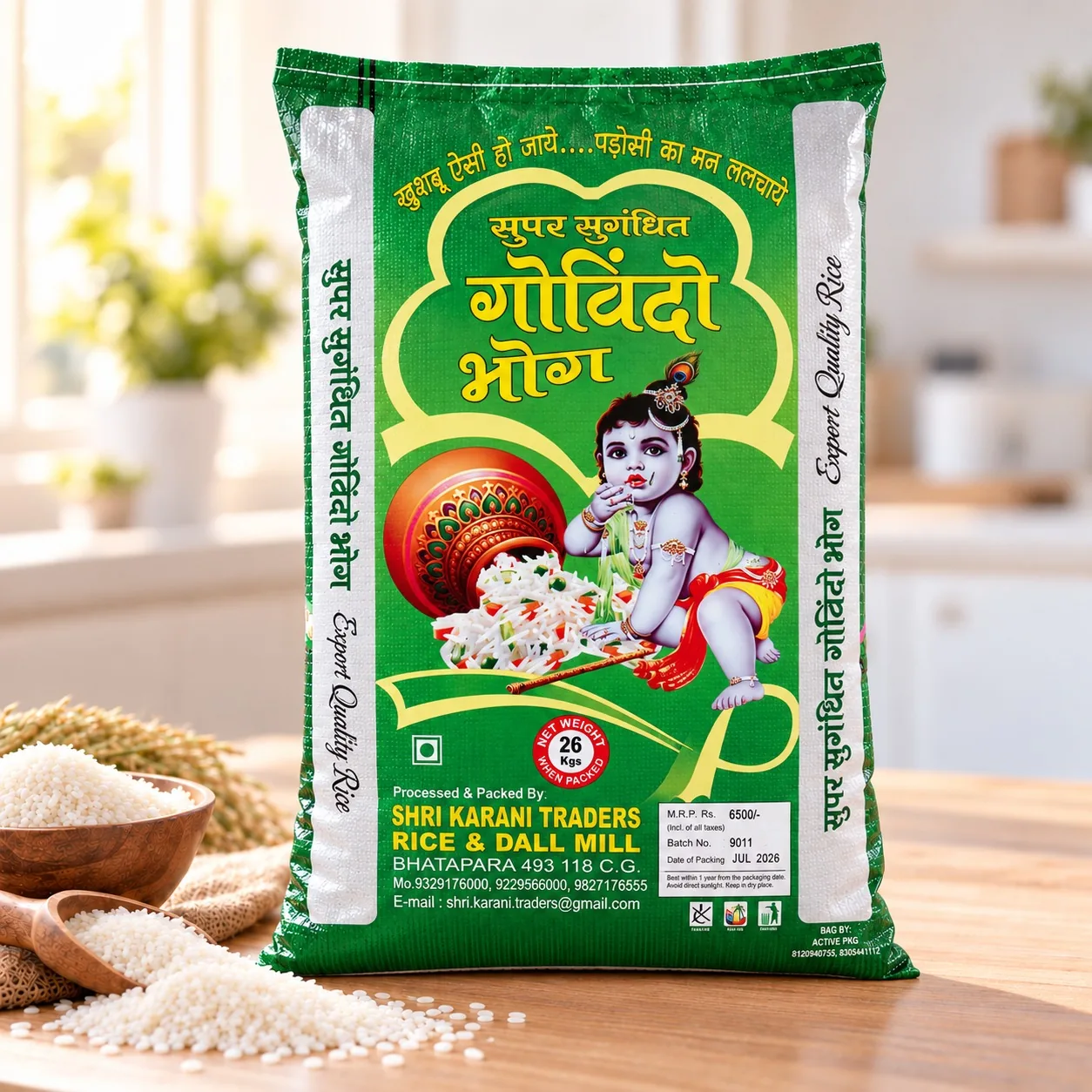
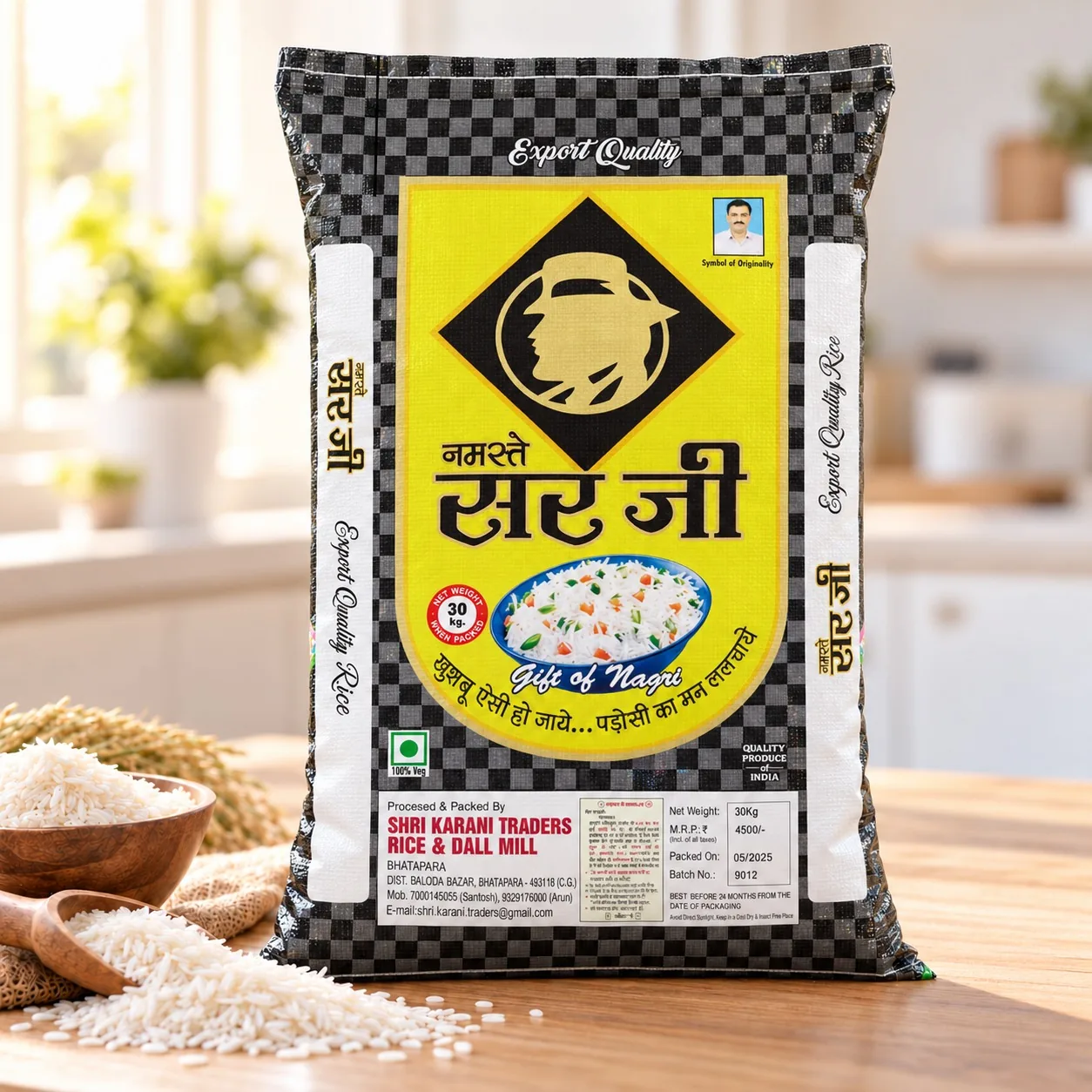
At Shri Karani Traders (Rice Mill) in Bhatapara, Chhattisgarh, we mill Gobindobhog sourced mainly from West Bengal, naturally aged and Sortex-cleaned, under four brands: Super Fine Scented Rice SIR, the SIR Everyday Pack, Super Bombay Queen and Sugandhit Govindo Bhog.
Sources
- Gobindobhog rice, Wikipedia
- Bengal aromatic rice: GI and AGMARK, Bidhan Chandra Krishi Viswavidyalaya
- The Gobindobhog rice gets GI status, GKToday
- Aromatic rice, Wikipedia
Published 28 October 2026. Last reviewed 28 October 2026.