
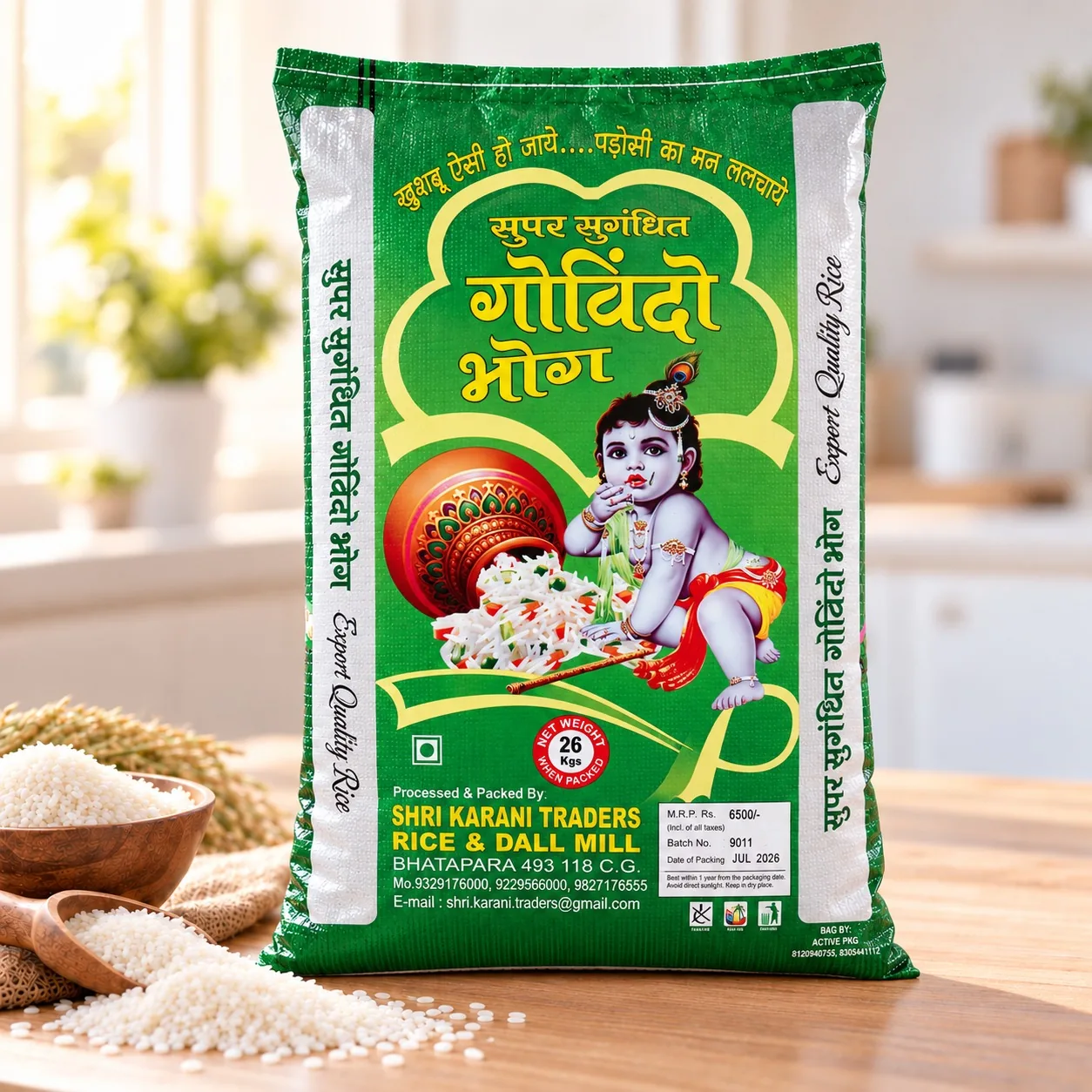
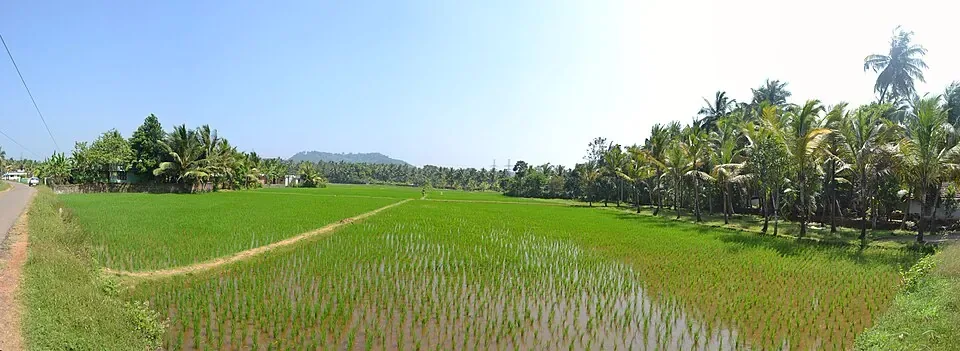
All aromatic rices get much of their scent from the same natural compound, 2-acetyl-1-pyrroline. The big difference is the grain. Basmati is long and cooks dry and separate. Gobindobhog (West Bengal), Jeerakasala or Kaima (Kerala) and Seeraga Samba (Tamil Nadu) are small-grain rices that soak up ghee and spices, and they are the traditional choice for regional biryanis, ghee rice, pulao and sweets.
What makes a rice aromatic
Aromatic rice gets its nutty, popcorn-like scent mainly from a natural compound called 2-acetyl-1-pyrroline. Fragrant varieties carry a small change in a gene called BADH2, which lets this compound build up in the grain. Basmati, Jasmine, Gobindobhog and many Indian heirloom rices all share this trait.
So the scent is a family likeness. What really separates these rices in the kitchen is grain size, texture after cooking, and the dishes each region built around them.
Side-by-side comparison
| Rice | Home region | Grain | Cooked texture | Best known for |
|---|---|---|---|---|
| Gobindobhog (Jeera rice) | West Bengal · GI 2017 | Short, white | Soft, slightly sticky | Payesh, bhog khichuri, pulao |
| Jeerakasala / Kaima | Wayanad, Kerala · GI 2010 | Small, aromatic | Light, holds spices | Thalassery and Malabar biryani, ghee rice |
| Seeraga Samba | Tamil Nadu | Very small | Separate, fragrant | Dindigul and Ambur style biryani |
| Joha | Assam · GI | Short | Soft, sweet-scented | Special meals, pitha, kheer |
| Dubraj | Chhattisgarh · Nagri Dubraj GI | Short to medium | Soft | Pulao, festive meals |
| Basmati | Northern India and Pakistan | Long, slender | Dry, separate, grows long | Pulao, North Indian and Hyderabadi biryani |
Scroll sideways to see the whole table.
Jeerakasala and Kaima
Wayanad Jeerakasala is a traditional, non-basmati aromatic rice from Wayanad district in Kerala. Its name comes from the Malayalam word for cumin, jeerakam, because the grain looks like a cumin seed. It is grown in the Nancha (kharif) season in Wayanad’s cool valley bottoms, largely by the Wayanad Chetti, Kurichya and Kuruma communities, and it received a GI tag on 4 October 2010.
In Malabar kitchens it is usually called Kaima. Thalassery biryani is famous precisely because it uses Kaima (Jeerakasala) instead of basmati, so the small grains soak up the masala and ghee.
Seeraga Samba
Seeraga Samba (சீரக சம்பா) is Tamil Nadu’s tiny aromatic rice, again named after cumin (seeragam). It is the rice behind Dindigul and Ambur style biryani, where cooks want small, fragrant grains that take on the spice rather than long, dry grains.
Gobindobhog
Gobindobhog is West Bengal’s GI-tagged aromatic rice: short, white and buttery-scented, and noticeably softer and stickier than most other aromatic rices once cooked. That softness is a strength in payesh and khichuri. In many South Indian markets it is sold as Jeera rice, and many households and caterers use it in place of Kaima or Seeraga Samba for ghee rice and small-grain biryani. Read our full Gobindobhog guide.
Where basmati fits
Basmati is the long-grain aromatic rice of northern India and Pakistan. It cooks dry and fluffy, and the grains grow noticeably longer. It is the right pick for North Indian pulao and Hyderabadi or Lucknowi biryani. It is not a substitute for small-grain rices in Thalassery biryani or Bengali payesh, where the whole point is a small, soft grain.
Which one should you buy?
- For payesh, kheer and bhog khichuri: Gobindobhog.
- For Thalassery or Malabar biryani: Kaima (Jeerakasala); Gobindobhog is a close, easy-to-find alternative.
- For Dindigul or Ambur biryani: Seeraga Samba; Gobindobhog also works.
- For long-grain biryani and North Indian pulao: basmati.
- For everyday rice with aroma: Gobindobhog, at a price that works for daily use.
Sources
- Aromatic rice, Wikipedia
- Wayanad Jeerakasala rice, Wikipedia
- Thalassery cuisine, Wikipedia
- Aromatic medicinal rice varieties, Kerala State Biodiversity Board
- Gobindobhog rice, Wikipedia
Published 28 October 2026. Last reviewed 28 October 2026.